Combustion instabilities can lead to excessive noise, structural fatigue, reduced burner performance and unplanned downtime in industrial furnaces and boilers. The combustion dynamics expert centre assists in combustion stability challenges related to thermoacoustics, combustion noise and flame stabilization. Using experimental measurements and numerical models such as CFD we can predict the effect of for example hydrogen addition on combustion stability and guide burner design changes for the transition to carbon-free gaseous and liquid fuels. We can help identify the root cause of the instability and obtain stable combustion operation in your industrial furnace or boiler.
Curious what we can do for you?
Contact us to arrange an open discussion about your combustion challenge.
Email: combustiondynamics@demcon.com
Our services
Contract research & development
Combustion modelling & simulation
Experimental measurements on site
What is combustion dynamics?
Combustion dynamics can originate from various sources. It can be caused by external perturbations from auxiliary equipment, internally by instabilities in the air-fuel flow, by a coupling of the unsteady heat released by the flame and the acoustics of the combustion system, or by a combination of these sources. If left unaddressed, combustion instabilities can severely affect the performance and lifetime of a combustion system. Large pressure oscillations can occur, which cause fatigue failure of the structure. We can help with identifying the dominant source of the instability and advice on options to stabilize the systen. For example, through changes in burner design, operating conditions or by adding tuned acoustic dampers.
Consulting for industrial combustion systems
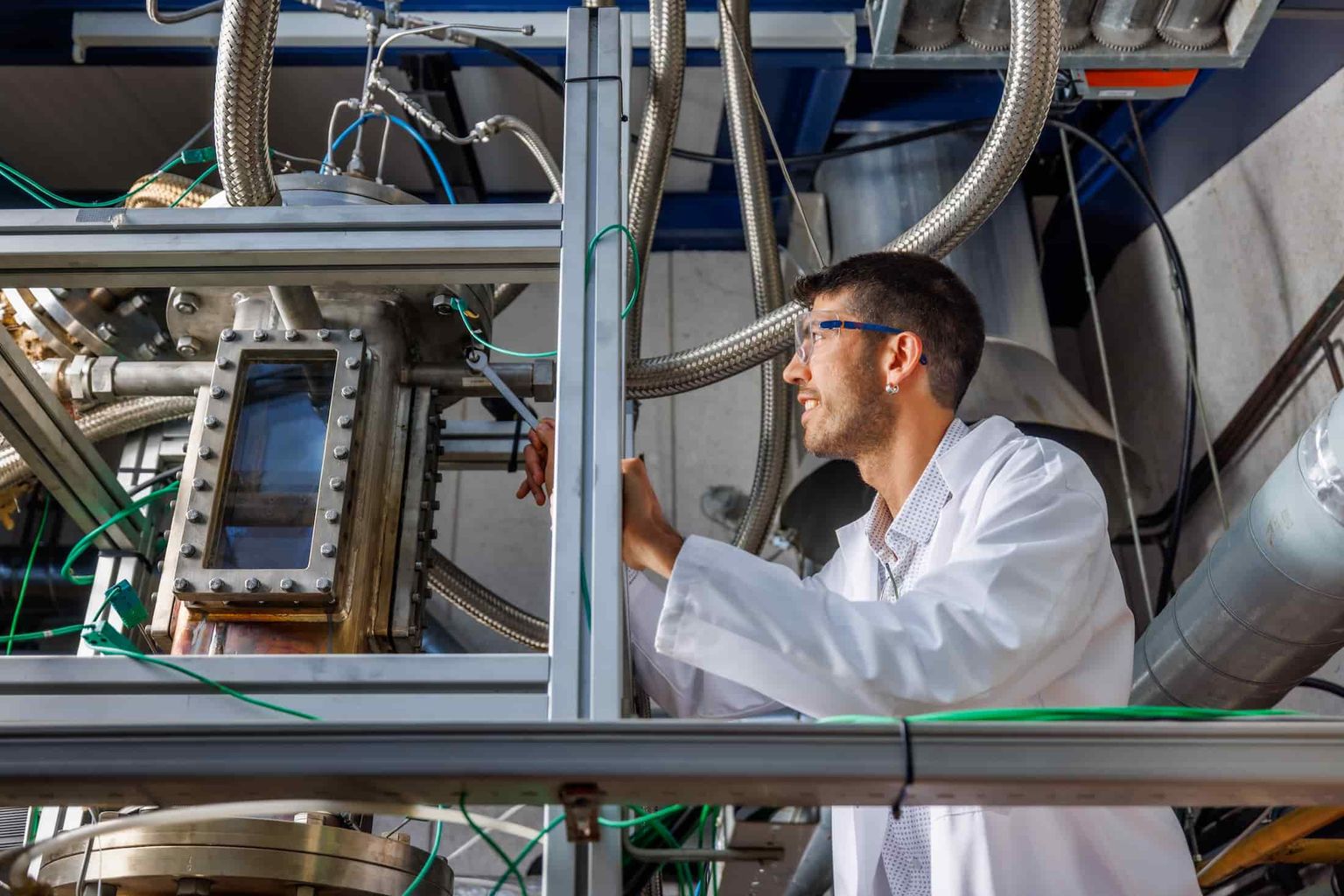
We have the academic knowhow and engineering approach to tackle challenges related to combustion instabilities, combustion noise and flame stabilization. Using detailed Computational Fluid Dynamics (CFD) simulations we can model the behaviour of combustion systems, for example to predict the combustion stability during the design phase. This reduces the uncertainty of new burner designs. In addition, we can perform acoustic measurements on-site and in our lab to analyse the source of combustion noise and instabilities.
Experimental diagnostics for combustion noise
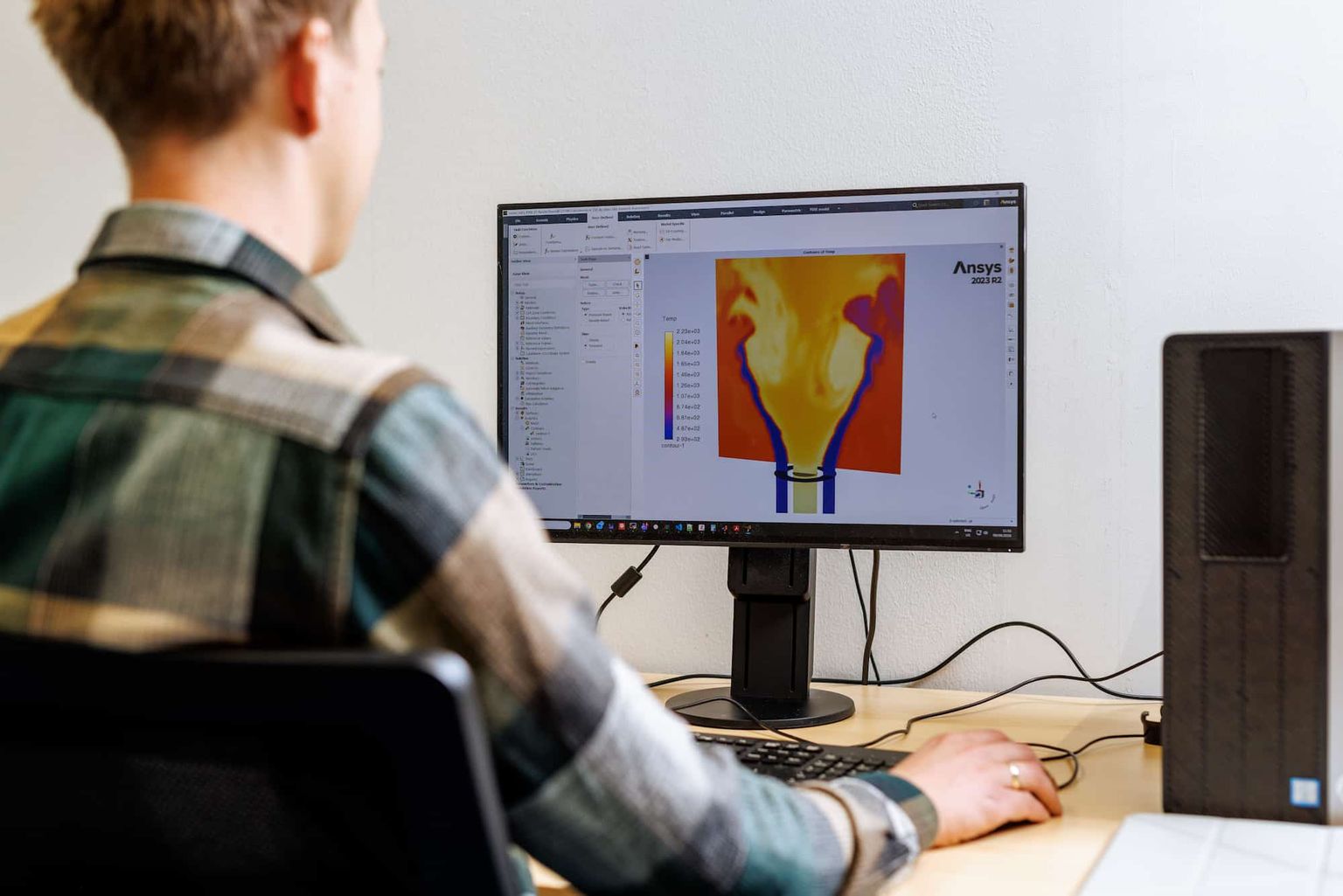
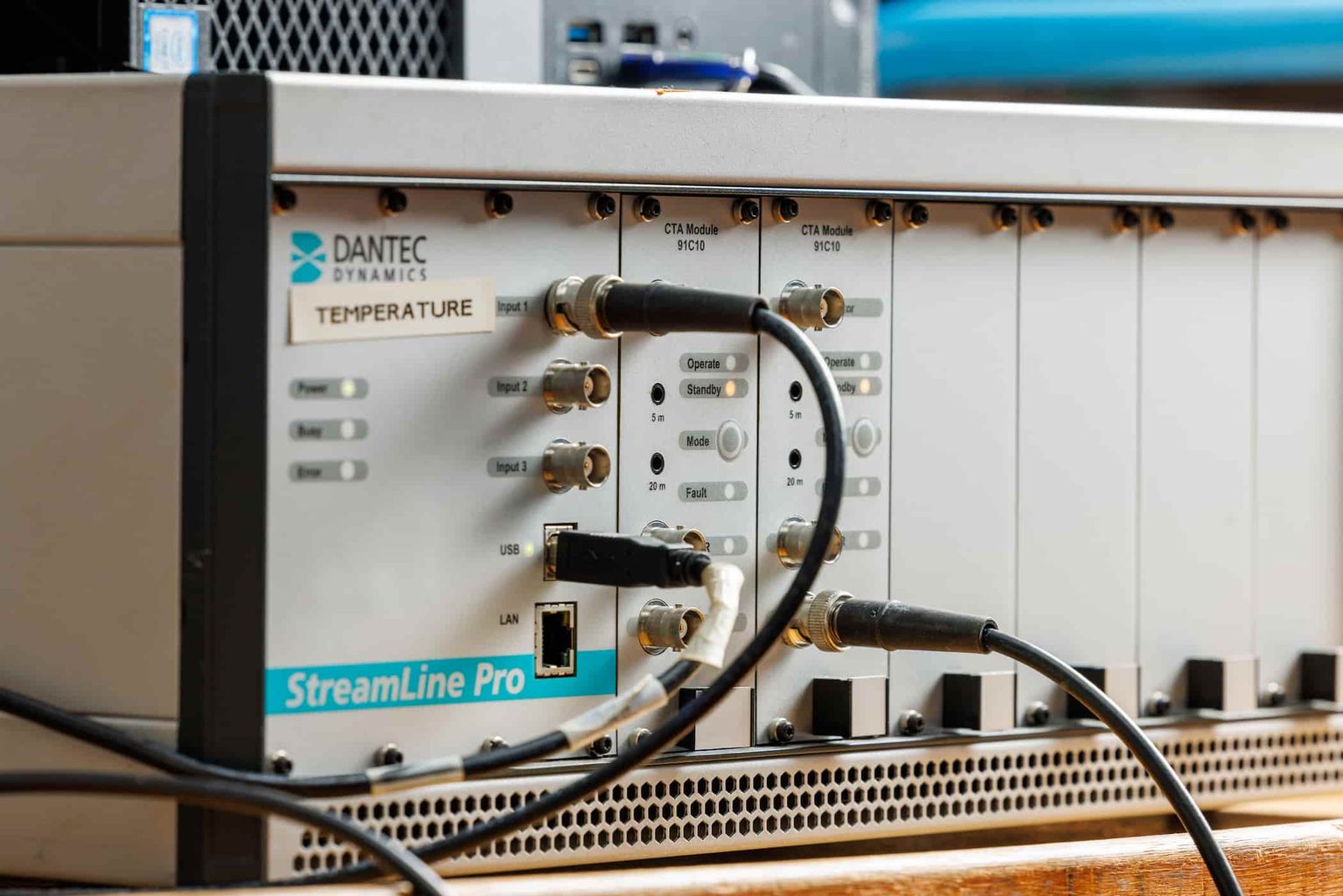
Combustion instabilities often result from multiple interacting mechanisms, making root-cause identification challenging. Using high-accuracy pressure transducers and photo-multiplier tube measurements of heat release rate, we characterise combustion noise and dynamic flame behaviour across a wide frequency range. Measurements can be performed both on-site and in our laboratory facilities under representative operating conditions. The acquired data are analysed using IFTA data acquisition systems and advanced signal-processing techniques. By examining the relationship between pressure and heat release fluctuations, we can identify the dominant source of combustion instability and assess the strength of thermoacoustic coupling. The measurements also provide validation data for CFD and thermoacoustic models, reducing uncertainty when evaluating burner modifications, operating conditions or acoustic damping solutions.
Informed design choices using numerical modelling
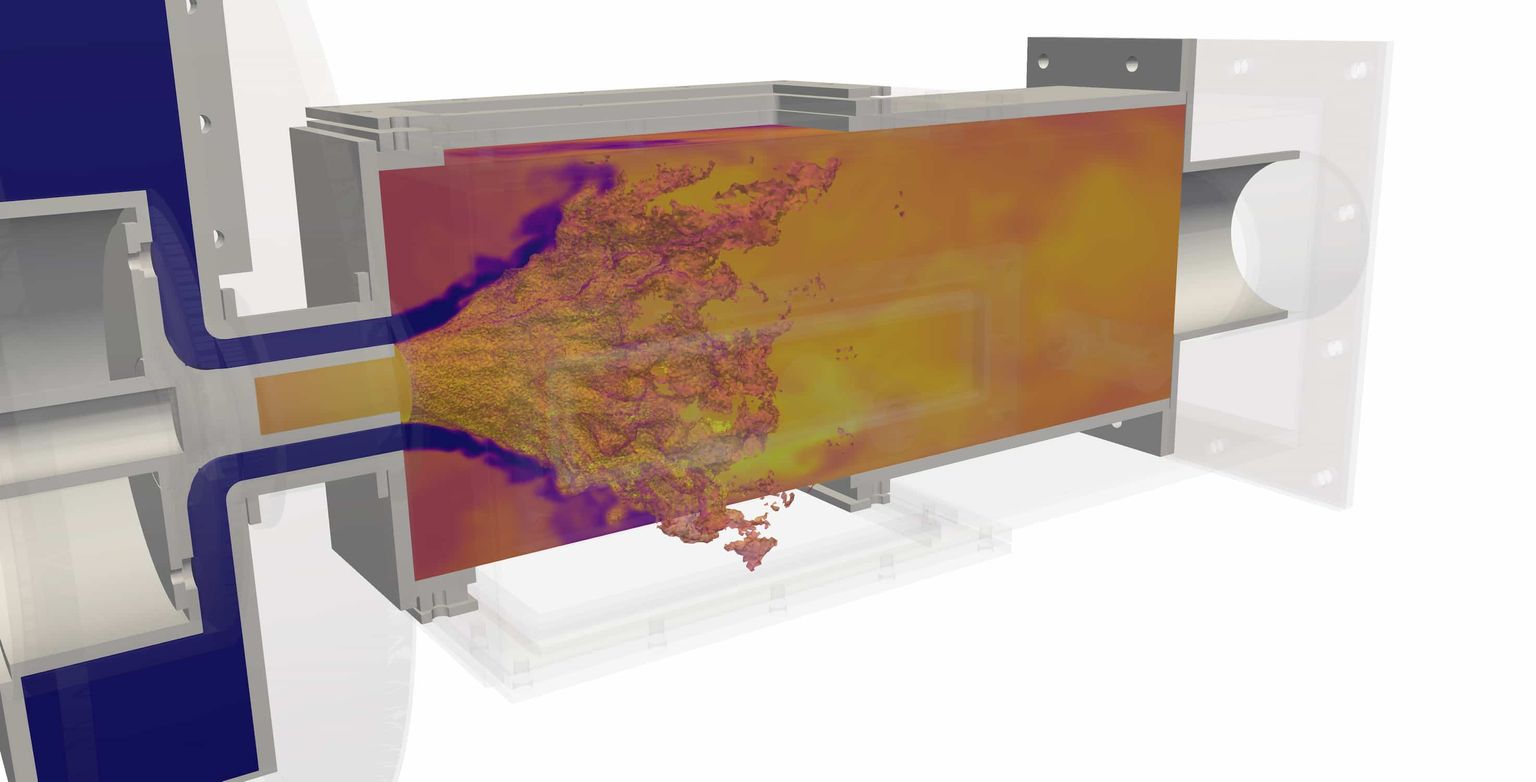
Our numerical models allow us to characterize the combustion stability in an industrial system. Accurate CFD simulations allows us to determine the response of the turbulent flame to flow and acoustic disturbances. This response is known as the Flame Transfer Function (FTF). Using the FTF we can predict the thermoacoustic stability of the combustion system, for a range of operating condition ensuring stability throughout the operating range. Additionally, it allows us to assess the effect of changes in fuel composition and burner design. Combined with an acoustic model, we can predict the stability of the system during the design phase. This allows you to make better design choices and reduce trail-and-error.
The combustion dynamics expert center
The combustion dynamics expert centre was established as part of the DYNAF project. This project focuses on the prediction of combustion dynamics in large industrial furnaces and boilers to provide engineering solutions. The project was funded by the NWO and industrial partners. During the DYNAF project, collaborations with Duiker Clean Technologies and Danieli Corus has built experience in analysing combustion dynamics.
The knowledge on combustion dynamics in industrial systems gain during the DYNAF project, has been published in the following research output:
- Thermoacoustic stability analysis of the Duiker Clean Technologies industrial test furnace
- Thermoacoustic stability analysis of a Danieli Corus hot blast stove fuelled by diluted syngas
- PhD thesis Dario Passato: Wave-Based Methods for High Order Network Modelling and Analysis of Thermo-Acousto-Elastic Systems
Collaboration between Demcon Multiphysics and the University of Twente
The expert centre is a collaboration between the Demcon Multiphysics and University of Twente has the expertise to tackle problems related to thermoacoustics, flame stabilization, and burner design.
Demcon Multiphysics
Demcon multiphysics is an engineering agency with high-end expertise in the area of heat transfer, fluid dynamics, structural mechanics, acoustics, electromagnetism and nuclear physics. We support clients from a wide variety of market sectors and help them achieve their goals in research and development with deep physical insights. We combine fundamental physical knowledge from an analytical approach with Computer Aided Engineering (CAE) simulations tools Simulation-driven product development increases the development efficiency and reduces the product development time. Our services can therefore fully support you in the designing phase, from idea up to prototype, from prototype to final design.
Thermal Engineering research group
The research group Thermal Engineering at the University of Twente builds on decades of research experience on various aspects of combustion dynamics. We multiple laboratory test rigs designed for pressurized combustion and atmospheric combustion using different fuels (natural gas, methane, hydrogen). Data of pressure, temperature and heat release rate can be logged using our mobile data acquisition system for measurements on-site. Combined with the predictive capabilities of CFD simulation, measurement data provide a complete and validated analysis of a combustion system.